 La Tribu Life Remodelaciones
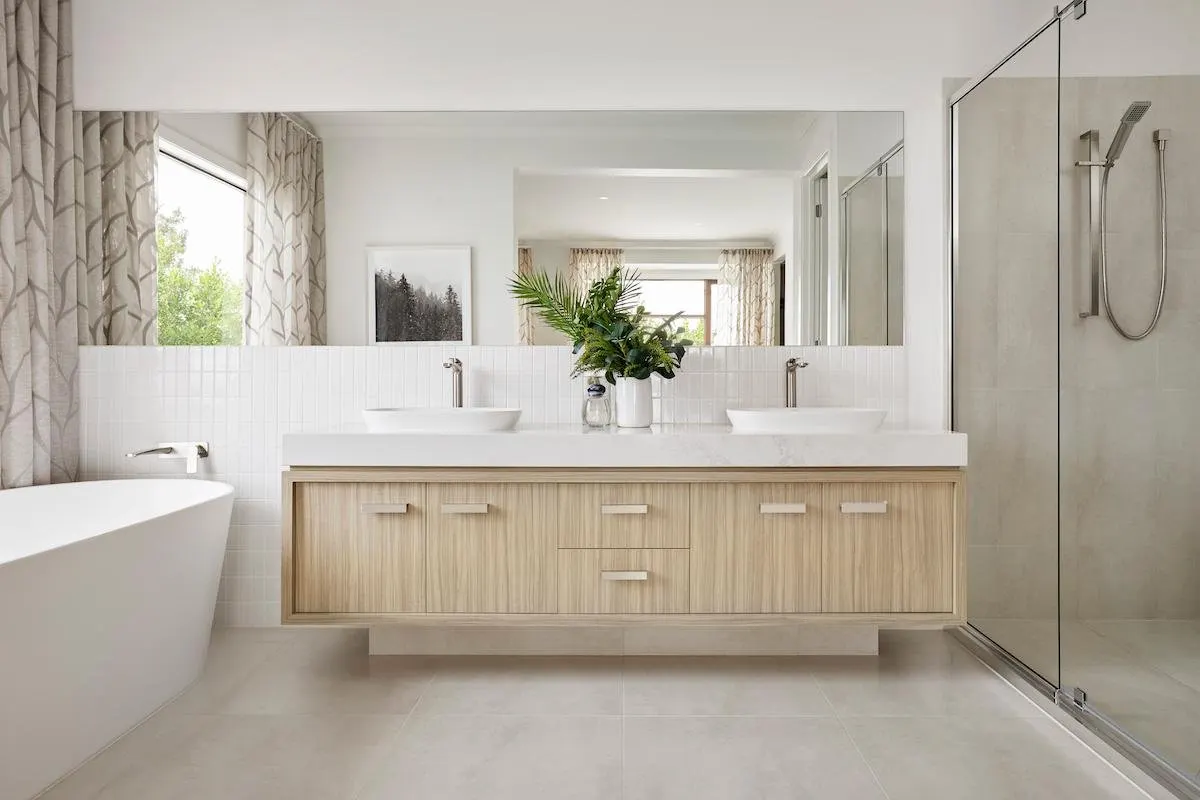
In Florida, a bathroom has to survive more than splashes. Humidity, steam, condensation and hard water all wear it down, so the materials you choose matter as much as how they look.
Quick answer
The best bathroom materials for Florida are non-porous and easy to clean: porcelain tile for floors and shower walls, quartz for countertops, tempered glass for showers, mold-resistant paint, and faucets with durable finishes and reliable internal parts. Add proper waterproofing and an exhaust fan vented outside, because poor ventilation is one of the main causes of bathroom mold.
What really damages a bathroom in Florida?
In Florida, the enemy isn't just the water you can see. Steam, condensation, poor ventilation and high humidity all count. The Florida Department of Health explains that mold grows wherever there is enough moisture or high relative humidity, and that controlling moisture is the key to stopping it. It sounds obvious until the first mold stain shows up in your bathroom. That's why the way materials, sealing and air extraction work together matters so much.
In Florida, waterproofing is not optional. In practice, poor ventilation is one of the main causes of bathroom mold, and it pays to choose materials that resist moisture, mold and hard water best, such as porcelain tile, quartz, tempered glass and mold-resistant paint. Let's look at each one.
Best materials for floors and wet walls
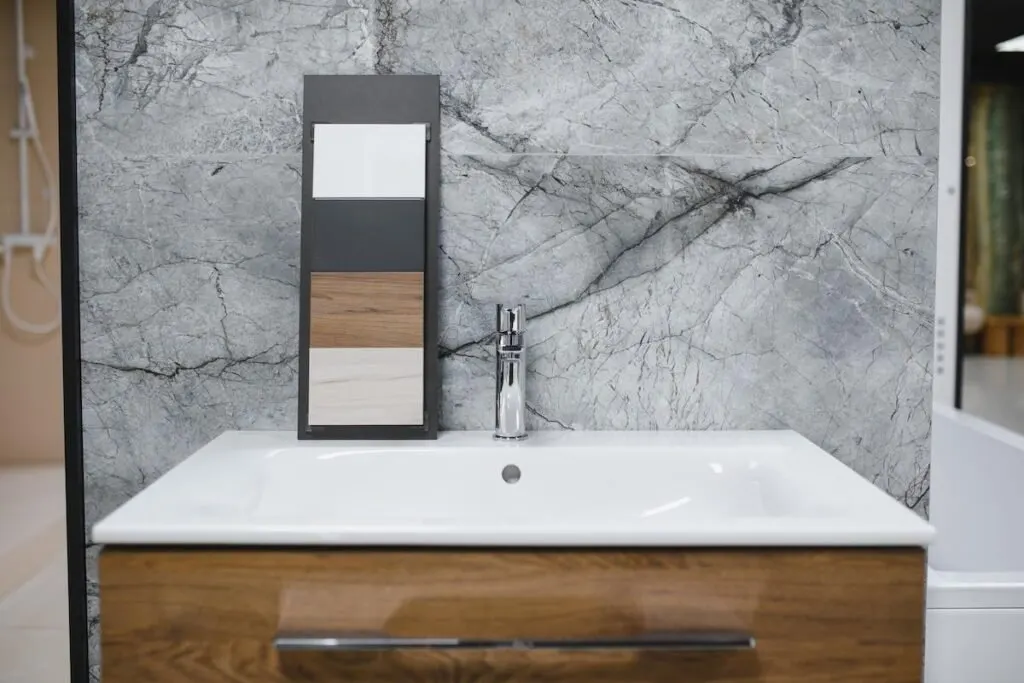
Floors: porcelain tile first
If you want the safest, most versatile option, porcelain tile is still the best functional base. It is a good fit for standard and mid-range remodels. Large-format porcelain also has lower maintenance costs and a lower moisture risk. In short, it's an ideal combination: waterproof, durable, and resistant to moisture and salt.
Shower walls: large-format porcelain or mold-resistant panels
Porcelain also works well on wet walls, but mold-resistant panels are another option, and higher-end remodels can use select stone. The logic is simple: less porosity means less maintenance and fewer failure points. In Florida, cutting down on grout joints and porous surfaces in wet areas usually helps the bathroom last longer.
At the premium level: stone, but with good judgment
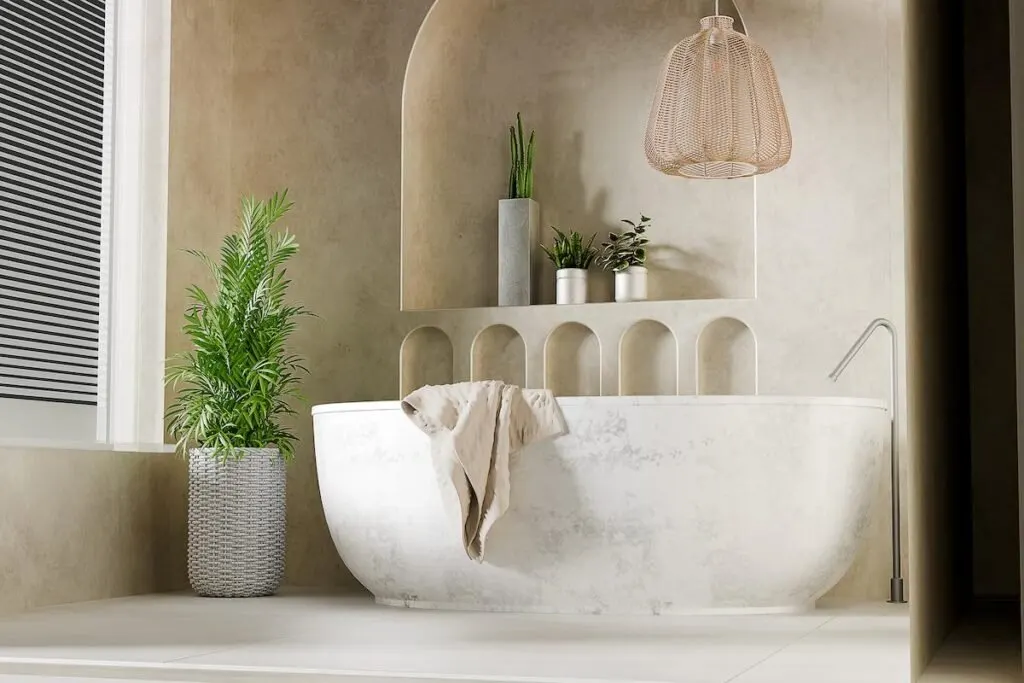
Marble, quartzite, select travertine or sintered stone can work in high-end bathrooms, but they don't all perform the same when it comes to maintenance. Here's a useful distinction: quartz is for everyday function; marble and quartzite belong at the premium level. The right takeaway is that natural stone can look spectacular, but it demands more discipline with sealing, care and maintenance, and it has to be chosen for the right setting.
Countertops, vanities and faucets that last
Countertop: quartz for real-life use
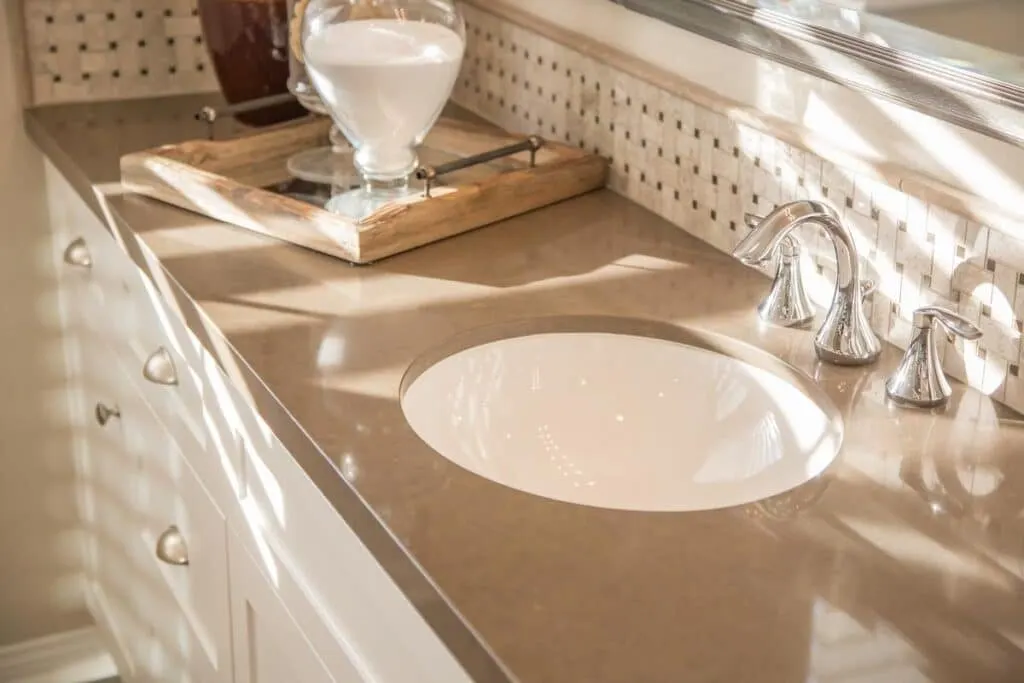
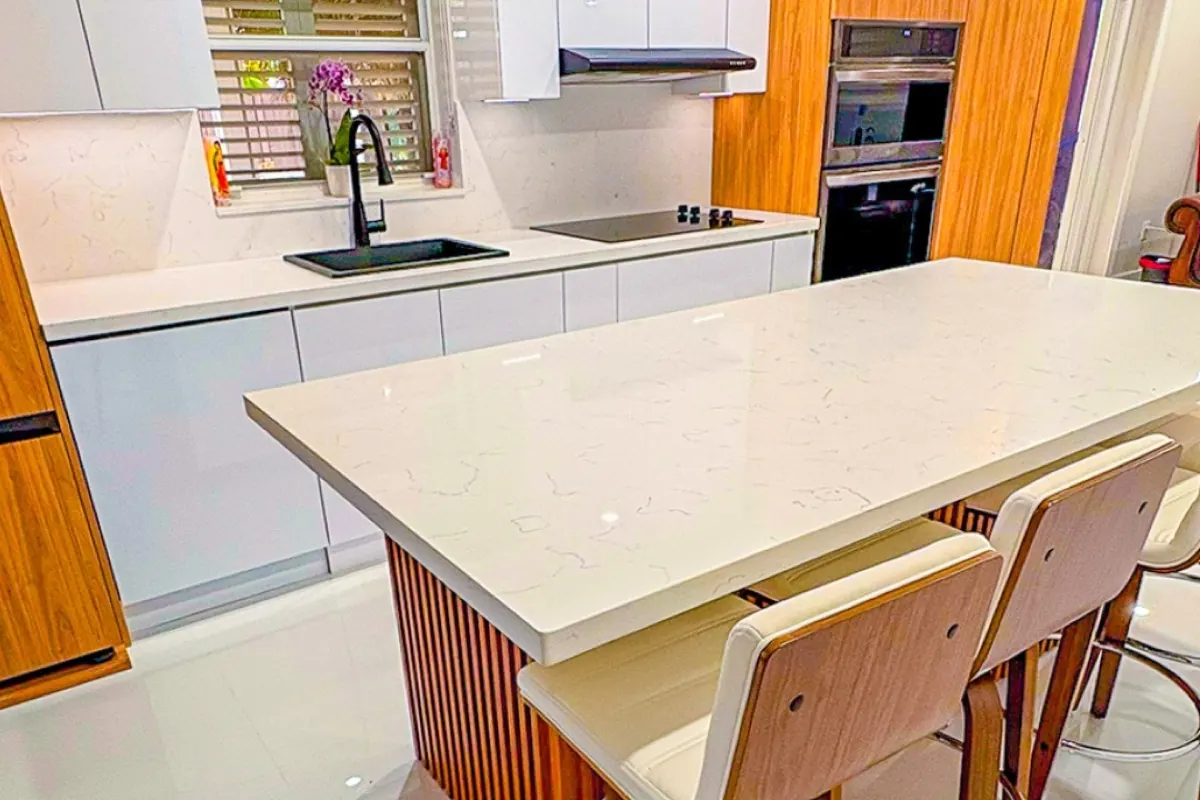
If the bathroom will get heavy use, quartz is the most balanced choice. It's non-porous and doesn't need ongoing sealing, which is especially useful in a humid climate like Miami's. It also ranks above unsealed natural granite for resistance to moisture and stains.
Vanity: moisture resistance over showy woodwork
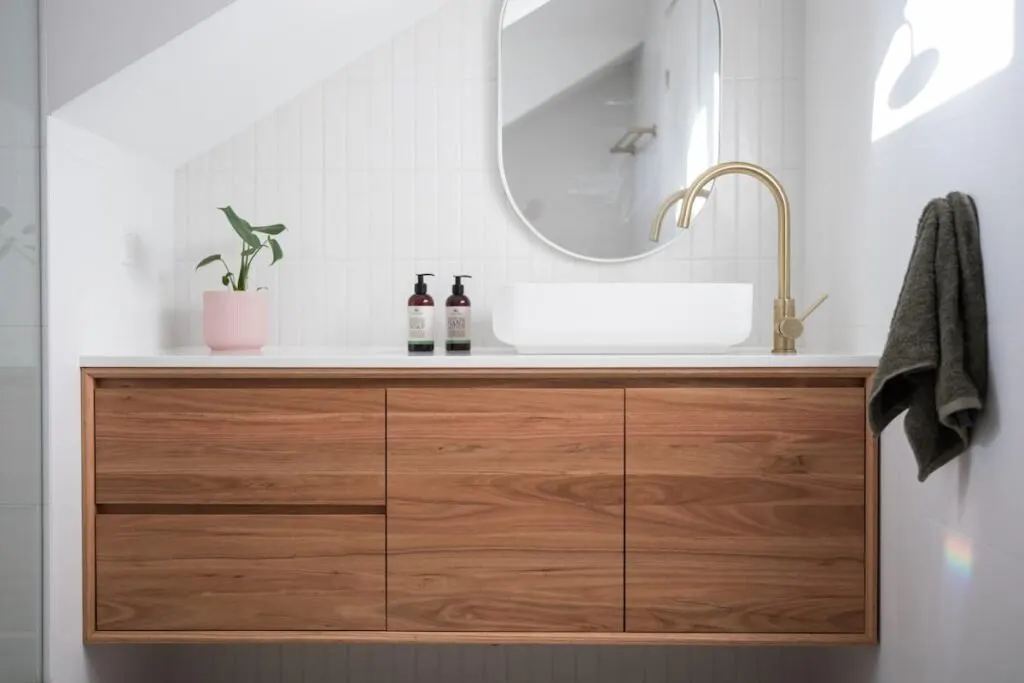
A good-quality prefabricated vanity is always a sound choice at the standard level. At the mid-range level, go with a custom, moisture-resistant cabinet, and at the luxury level, handcrafted custom woodwork is best. What matters isn't only whether the vanity is prefabricated or custom, but whether its finish and construction can handle steam, constant cleaning and small cycles of humidity without swelling or showing wear quickly.
Faucets and fixtures: choose them for hard-water performance

In Miami, prioritize faucets with durable finishes and reliable internal parts, toilets and sinks with easy-to-clean coatings, and accessories that resist corrosion and stains. Some of the most respected brands in the local market are Grohe, Hansgrohe, Kohler, Moen, Delta, Toto and Duravit, thanks to their wide availability, replacement parts and performance.
The practical takeaway: in a Florida bathroom, a “pretty” faucet that can't stand up to mineral stains, or that has mediocre internal parts, ages very fast. Hard water doesn't always ruin a finish right away, but it wears it down with daily use, and the sense of quality fades along with how well it works.
Paint and ventilation that stop mold
Paint: a mold-resistant, moisture-resistant formula
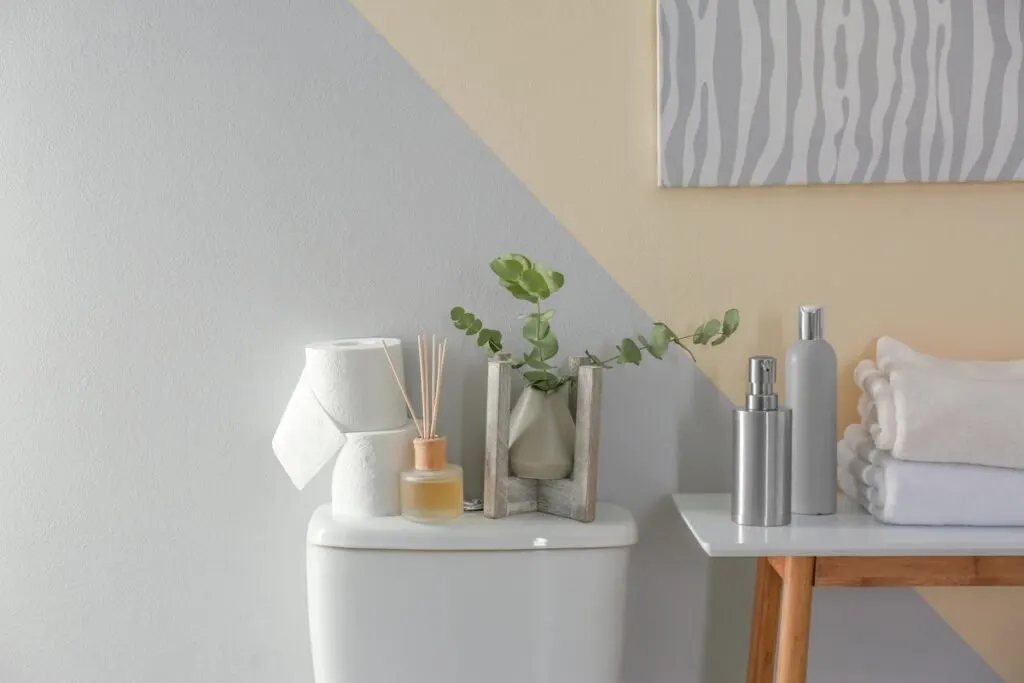
Paint is a key part of choosing the best bathroom materials for Florida. A moisture-resistant paint with a mold-resistant bathroom formula is always a good idea. Higher-quality 100% acrylic paints handle humid rooms better and help you avoid false savings. By false savings we mean buying a cheaper paint without mold-resistant properties: with Miami's relative humidity, you'll end up repainting far too soon and paying again.
Ventilation: vent to the outside, never into the attic
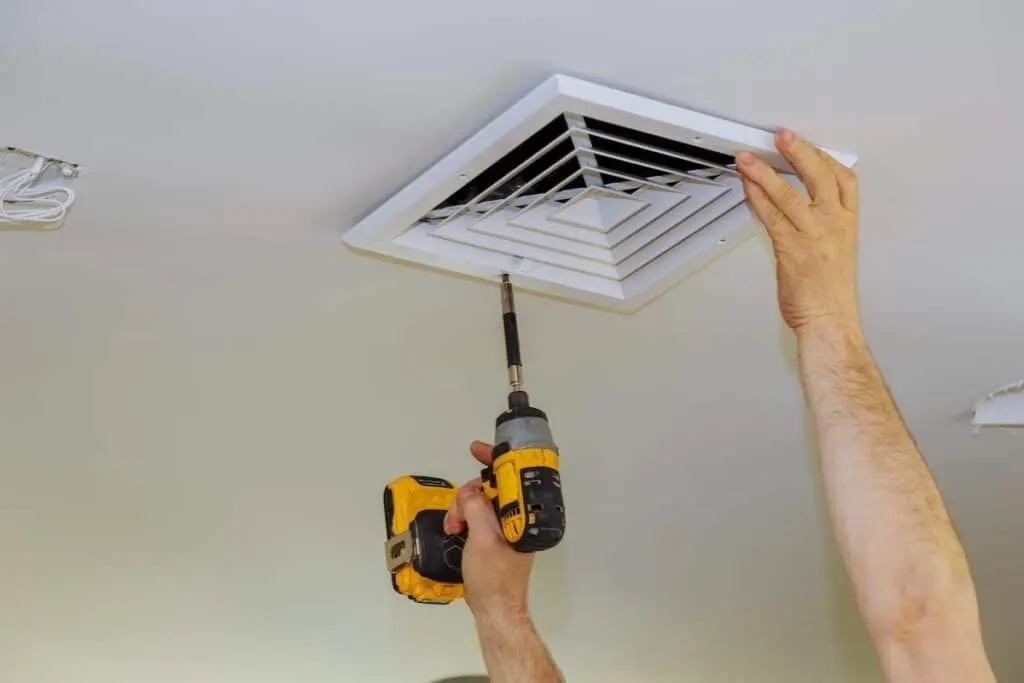
This is not a place to improvise. The City of Miami explains that interior remodel permits cover bathrooms and kitchens, so if you touch the building systems, you need to follow the proper process. Keep in mind that, according to Florida's home energy ventilation guidance, the exhaust fan should vent to the outside, not into the attic, and the usual reference for bathrooms is a minimum of 50 CFM intermittent. A timer or humidistat is also recommended to control humidity better, regardless of daily use.
According to the Florida Department of Health , ventilation is essential to prevent mold, control moisture, clear shower steam and keep humidity at reasonable levels. Good ventilation is a central part of your remodeling plan.
Bathroom materials to avoid in Florida
When we talk about the best bathroom materials for Florida in 2026, it also helps to review which ones to avoid or limit. Here are a few, and why:
1) Surfaces that are too porous or high-maintenance for daily use
If your goal is a functional, durable bathroom, not every “premium” material is automatically the best option. The point isn't to ban natural stone, but to understand that it needs more care. That's why we recommended marble and quartzite mainly for the premium level and kept quartz as the functional choice.
2) Cheap sealing or grout solutions
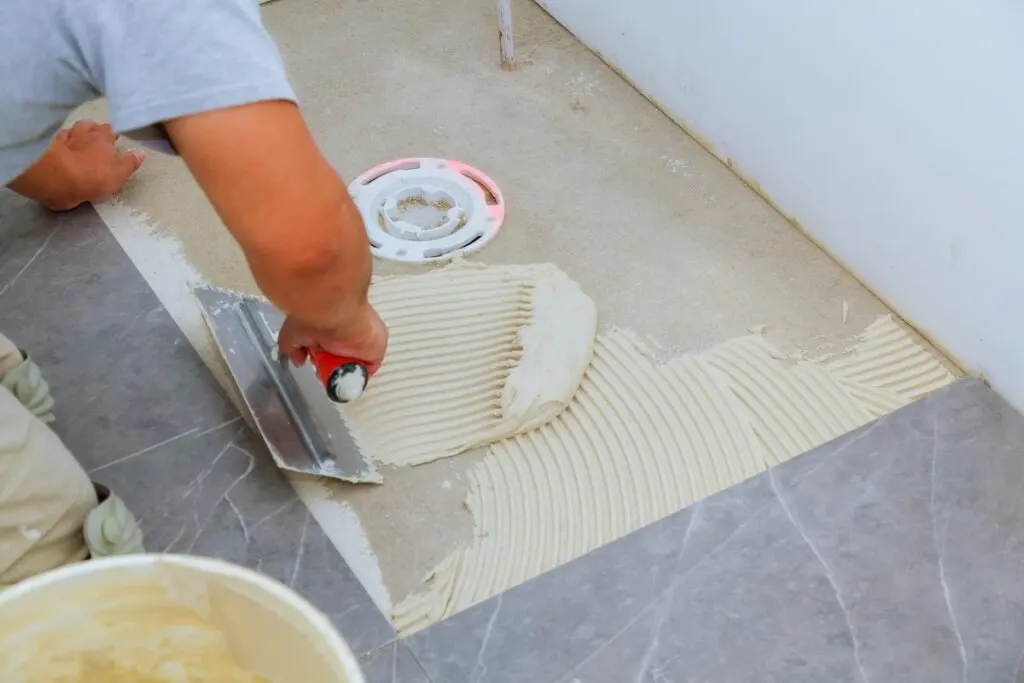
The wrong sealers and cheap grout break down faster and let water seep into the subfloor and walls. Redoing a poorly sealed shower can cost thousands of dollars down the road. That's exactly the kind of imaginary savings that ends up being expensive in Florida, and that we at La Tribu Life want to help you avoid.
3) Materials with a moisture-sensitive core in very wet areas
Remember that in humid spaces, non-porous and easy-to-clean materials usually win. So for a Florida bathroom, be wary of materials that depend too much on perfect edges or seals to keep out moisture in daily use. That's why porcelain tile, quartz and mold-resistant panels are always a solid choice for Miami.
Bathroom materials by budget: quick table
| Element | Standard | Medium | Luxury |
|---|---|---|---|
| Floor | Wood-look or stone-look porcelain | Large-format porcelain | Select natural stone or premium sintered stone |
| Wet walls | Porcelain or mold-resistant panel | Large-format porcelain + niches | Select stone or a well-specified premium wall finish |
| Countertop | Entry-level quartz | Premium quartz or compact surface | Marble, quartzite or high-end stone |
| Vanity | Good-quality prefabricated | Custom moisture-resistant cabinet | Handcrafted custom woodwork |
| Shower | Prefabricated shower base or basic tile | Custom shower with tempered glass | Spa-style shower with digital controls |
| Paint | Moisture-resistant | Mold-resistant + better finish | Premium system + ventilation control |
Bathroom remodel permits in Miami-Dade
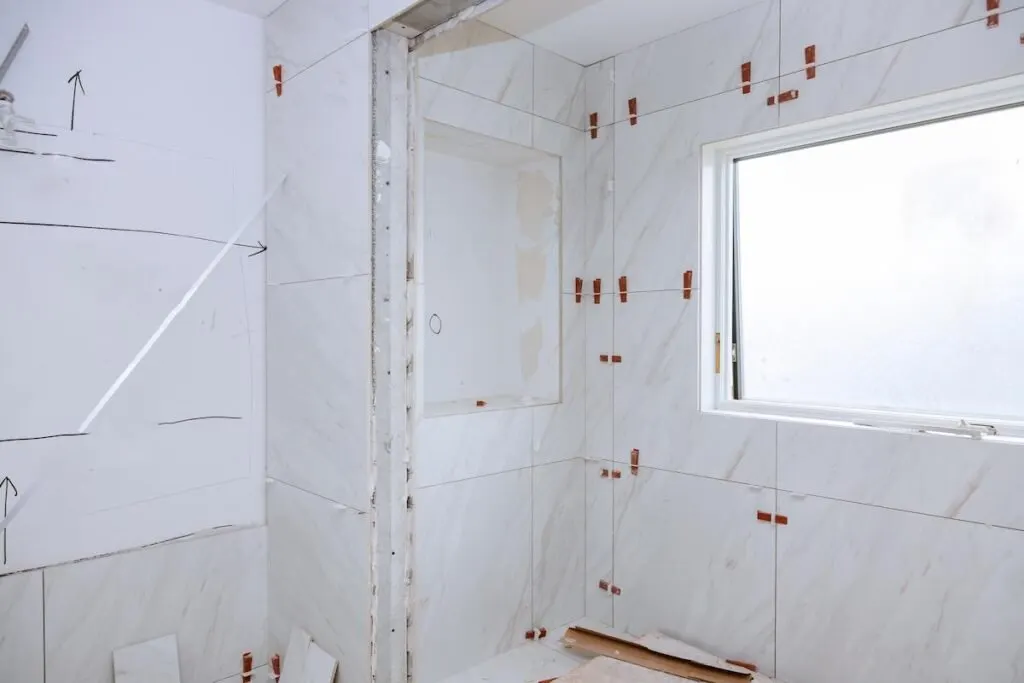
At Miami-Dade, permits are not optional when your bathroom remodel touches structure or plumbing. The county explains that any alteration or replacement of electrical, mechanical or plumbing systems is regulated by code and requires a permit. Inspections also take place at different stages of the project.
The City of Miami adds that a bathroom interior remodel usually goes through a formal permit process, although for some small projects with no structural changes, architectural plans may be enough. So if you have doubts, get expert advice. You can also read our guide to building permits and HOA approvals in Miami-Dade.
Remember: if you change plumbing, electrical, ventilation or the layout, you trigger permits and inspections. On top of that, if you live in a condo, work hours, logistics and HOA approval also come into play. Waterproofing is critical too, and in Miami it may require an inspection before tile goes into wet areas.
In Florida, the bathroom that ages well isn't the one that just looks more expensive. It's the one that combines:
- non-porous materials,
- good waterproofing,
- proper ventilation,
- and faucets and fixtures that don't give out quickly under real, constant use.
If you're planning one, see how we approach bathroom remodeling in Miami.
Frequently asked questions
What is the best bathroom floor for a Florida home?
In most cases, porcelain tile. It's the go-to base for standard and mid-range projects because it's durable, low-maintenance and more resistant to moisture.
Which countertop works best in a high-humidity bathroom?
Quartz is usually the smartest choice for real-life use because it's non-porous and doesn't need constant sealing. Natural stone can look better in premium projects, but it isn't the easiest to maintain.
Does bathroom ventilation really matter that much?
Yes. Florida Health explains that mold needs moisture to grow and that controlling moisture is the key. In a bathroom, that makes a well-installed exhaust fan a durability measure, not just a comfort feature.
Can I remodel a bathroom without a permit in Miami-Dade?
Only if the scope of your remodel is truly cosmetic. If you touch plumbing, electrical, ventilation or the layout, you need permits and inspections.
Which faucet and fixture brands and materials handle hard water best?
It doesn't depend only on the brand name, but on reliable internal parts, durable finishes and easy-to-clean surfaces. If technical details aren't your thing or you don't have time for them, get specialized help.
Note: The figures, costs, timelines and percentages in this article are for reference only. They can change by state, county or city, and over time. They are not a fixed rule or legal advice; always confirm them with the relevant official agency before you decide.
Informational content only. It does not replace professional advice and is not legal advice. La Tribu Life guides and represents homeowners, but does not perform construction work.

Comments
No comments yet. Do you have a question or an experience with a contractor? Share it.