 La Tribu Life Remodelaciones
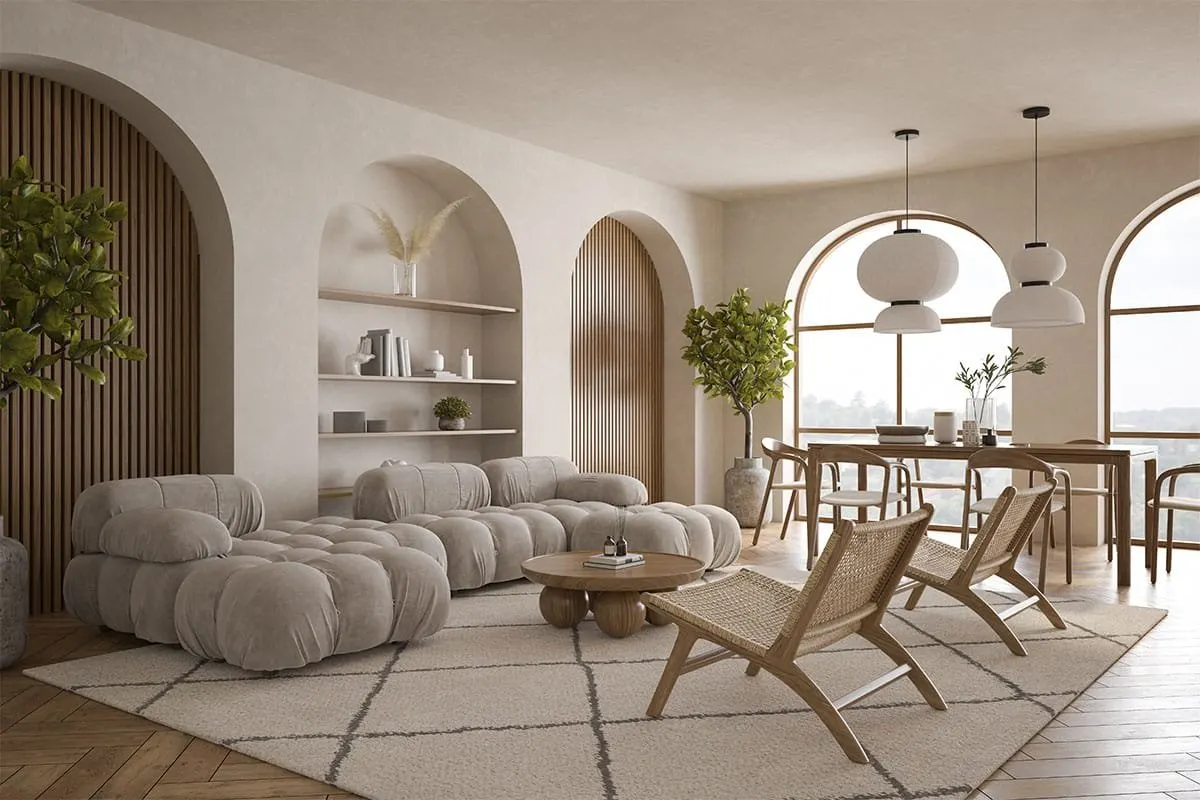
Choosing an interior design style in Miami isn't just about taste. The level you pick (standard, mid-range or luxury) shapes your materials, your cost per square foot, your permits and how much of that investment your property can actually get back.
Quick answer
In Miami, the three interior design levels differ in materials, durability against humidity and salt air, customization, technology and cost. Standard (Modern Scandi-Floridian) suits rentals and first homes; mid-range (Organic Modern Coastal) usually gives the best balance of look, cost and return; luxury (Quiet Luxury Tropical) only pays off when the property and buyer justify it.
How standard, mid-range and luxury differ
The real difference between standard, mid-range and luxury in Miami isn't just how it looks, “nice vs. nicer.” It's a combination of materials, durability against the climate, level of customization, built-in technology and how much of that investment makes sense for your type of property and your target market. Let's look at each one in more detail.
Standard: Modern Scandi-Floridian
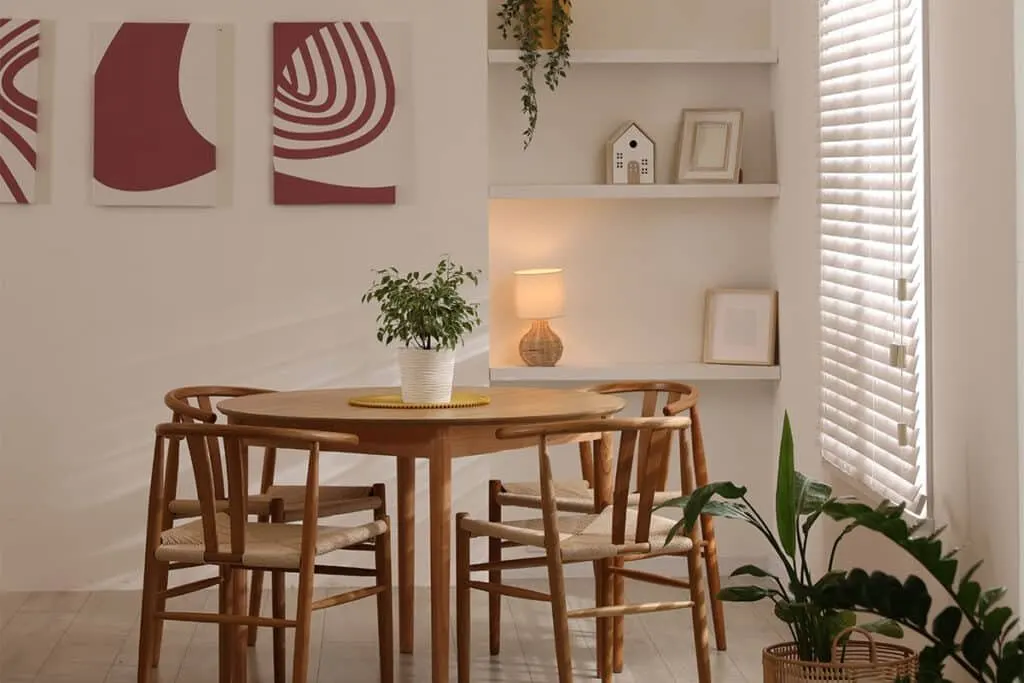
This level works well when the goal is to visually clean up the space, make it brighter and keep the budget under control. The base is usually light: warm whites, sandy beige, soft grays, light wood. In Miami, this helps especially in small condos, rental properties and homes that need to feel bigger without overloading the space.
Typical materials at this level include:
- budget porcelain tile that looks like wood or stone,
- SPC/WPC vinyl in dry interior areas,
- acrylic paint with anti-mold additives,
- upgraded basic hardware.
Where it usually works best:
- investment units,
- budget-conscious flips,
- first homes,
- refreshes for mid-term rentals.
Where many people go wrong:
- trying to make this level “look luxury” with a few standout pieces,
- using cheap materials in wet areas,
- or leaving windows, hardware or exterior paint with specs that are too weak for the coastal climate.
Mid-range: Organic Modern Coastal
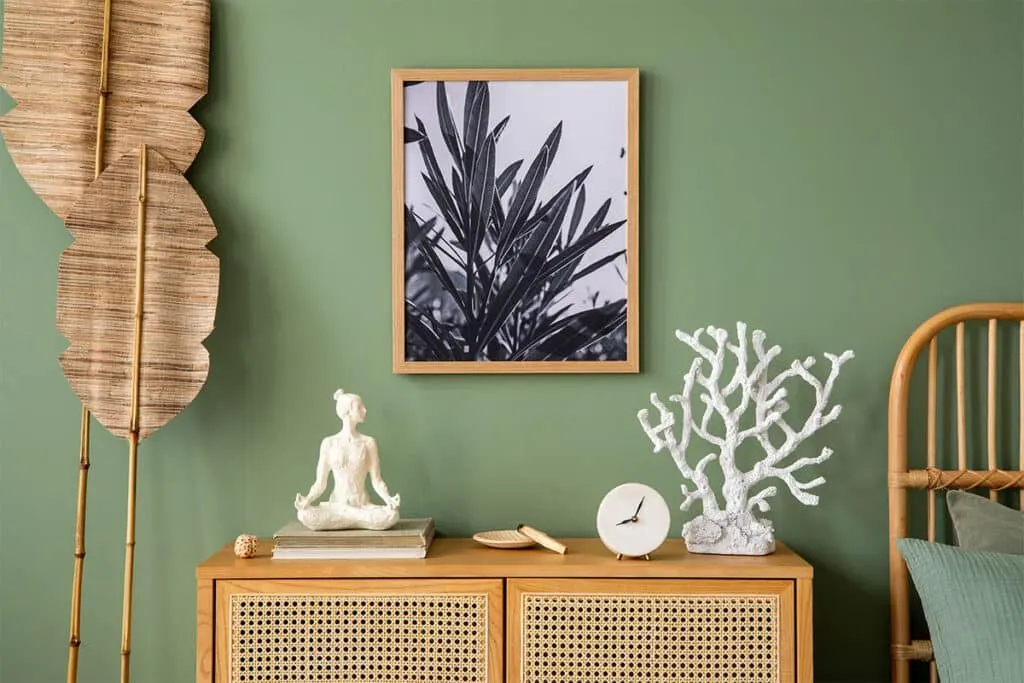
The mid-range level is, in many cases, the smartest spot in today's market. It combines clean lines with texture, natural materials and a clear sense of “stepping up” without reaching a “trophy home” budget. In South Florida, this visual language is closely aligned with what owners who live in the home, and well-positioned second homes, are looking for.
Here you usually find:
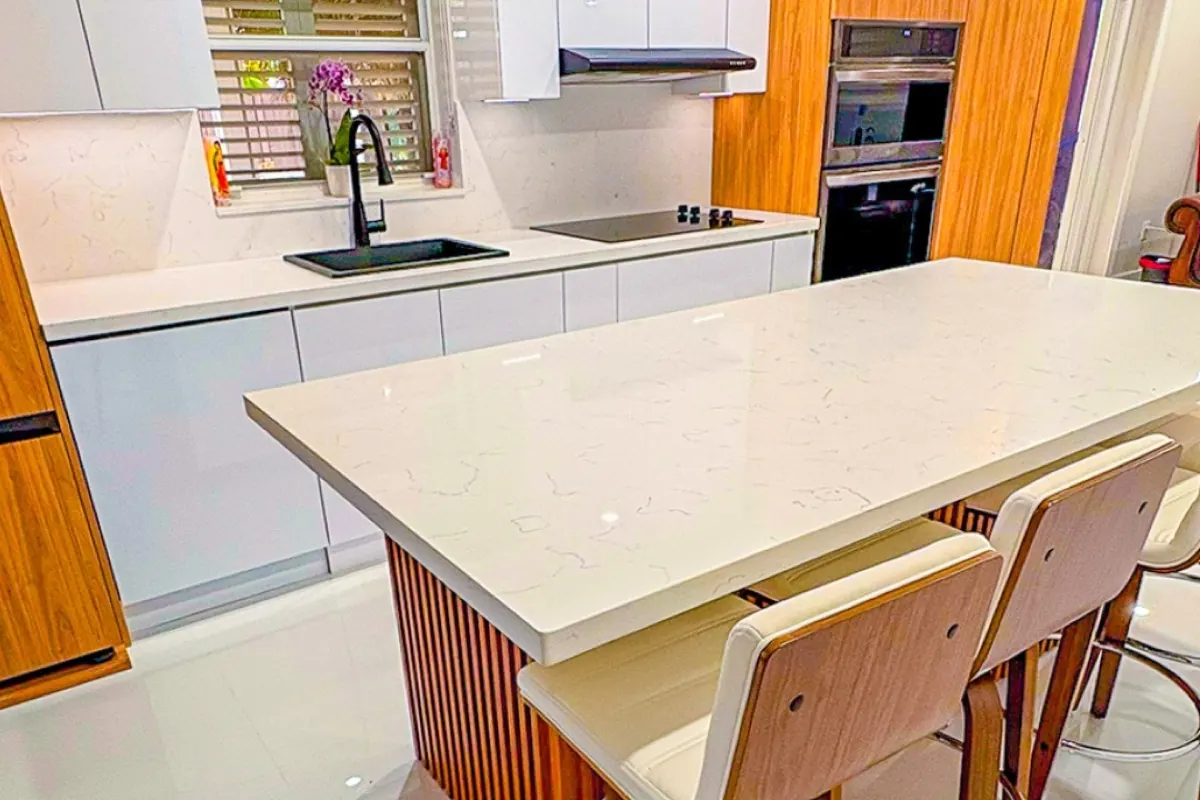
- large-format porcelain tile,
- engineered wood with better protection,
- sturdier quartz and wall finishes in the kitchen and bathroom,
- better-quality stainless steel hardware,
- palettes of greige, linen, sage, olive and soft terracotta.
This level is usually the most rewarding when you want the space to look clearly more expensive without paying the hidden cost of ultra-custom work or over-specifying.
Luxury: Quiet Luxury Tropical / Tropical Modernism
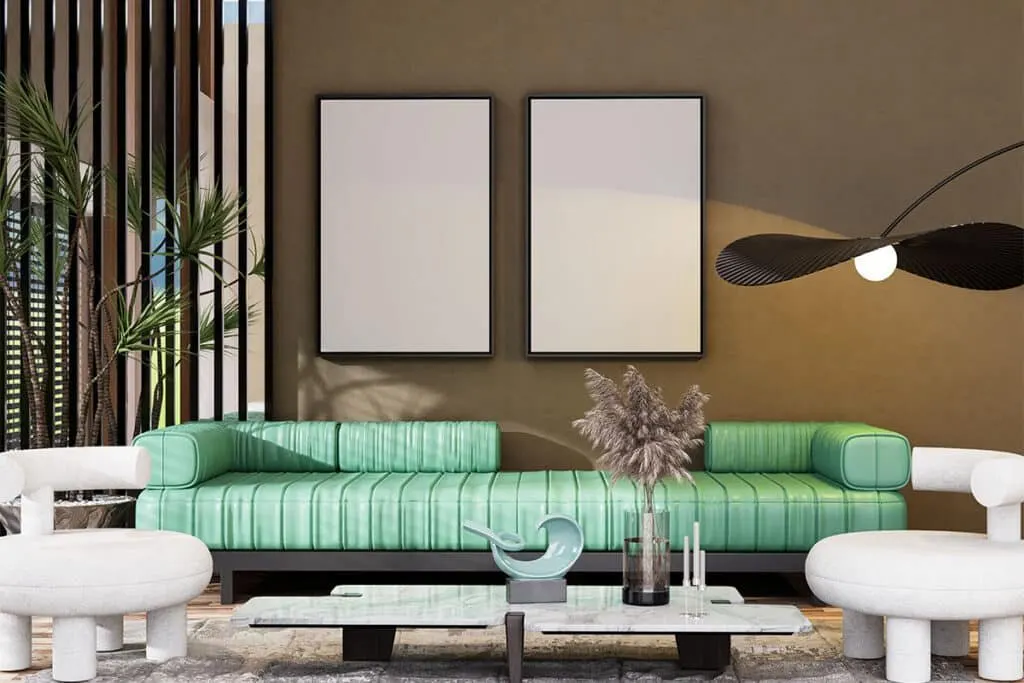
Luxury in Miami doesn't mean filling the house with expensive materials. It means consistency, scale, better-resolved pieces and technology that doesn't compete with the architecture. This is where you see large formats, natural wood paneling, premium sintered stone, grade 316 metals near salty air, high-performance glass and discreetly integrated home automation.
This level makes sense mainly in:
- oceanfront homes,
- penthouses,
- high-end second homes,
- properties competing for demanding international buyers.
The typical mistake here isn't spending a lot. It's spending a lot where the market won't pay for it, or taking a mid-level property to a spec that later doesn't match its comparables.
How much does each level cost in Miami?
In Miami, costs change fast when you go from cosmetic updates to real construction.
As a rough guide, a light remodel can run from $15–$30/sq ft at the standard level, $30–$45/sq ft at mid-range and $45–$60+/sq ft at premium. For a full remodel, the range goes up to $100–$150/sq ft for basic, $150–$250/sq ft for mid-range and $250–$500+/sq ft for urban high-end.
Comparison table: materials, costs and relative timeline
| Level | Main materials | Approx. cosmetic cost | Approx. full remodel cost | Relative timeline* | Best use |
|---|---|---|---|---|---|
| Standard | Budget porcelain tile, SPC/WPC, anti-mold paint, upgraded hardware | $15–$30/sq ft | $100–$150/sq ft | Short to medium | Rental, refresh, first home |
| Medium | Large-format porcelain, engineered wood, mid-range quartz, stainless steel hardware | $30–$45/sq ft | $150–$250/sq ft | Medium | Owner-occupant, upper mid-range condo, second home |
| Luxury | Premium sintered stone, sealed marble, 316 steel, impact + Low-E glass, home automation | $45–$60+/sq ft | $250–$500+/sq ft | Medium to long | Waterfront, penthouse, trophy property |
*Relative timeline: there's no single timeframe that applies to every case. It depends on the scope of work, whether it's a house or a condo, the area and how many approvals and permits you need. For example, in condo towers, a project that might take 8 weeks in a house can stretch to 10–12 weeks because of HOA restrictions, elevators and work hours.
Kitchens and bathrooms: where the difference shows most
In the kitchen, a partial remodel without moving walls runs about $150–$250/sq ft at the standard level, $250–$400/sq ft at mid-range and $400–$650+/sq ft for Miami high-end.
In the bathroom, the range goes from $300–$400/sq ft at standard, $400–$570/sq ft at mid-range and $570–$630+/sq ft at premium.
This matters because in Miami the jump from “looks better” to “cost a lot more” happens very quickly in kitchens and bathrooms. If your property doesn't need to move walls, systems or the facade, the best deal is often in materials and proportions, not in redoing the whole layout.
Best return, and where it's easy to overpay
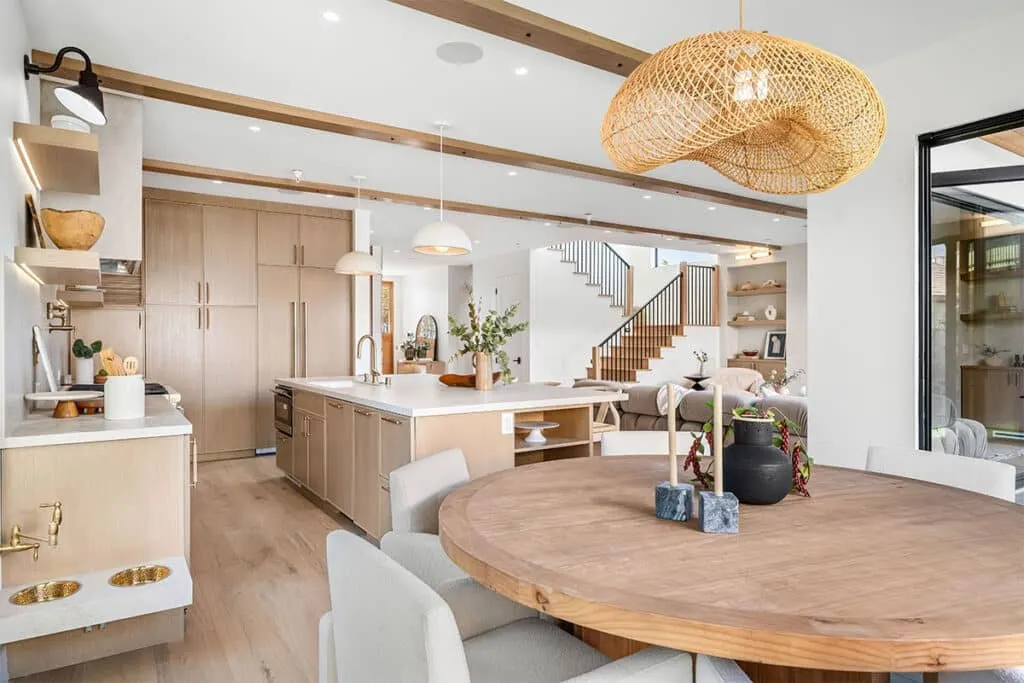
If the question is which level usually strikes the best balance between look, cost and return, the answer is usually mid-range. A minor kitchen remodel offers around 85% ROI; a standard bathroom remodel about 64%; and impact windows and doors between 73% and 85%, plus insurance and efficiency benefits.
That doesn't mean standard is bad or that luxury is a mistake. It means this:
- Standard works when your property needs order, a cleaner look and basic durability.
- Medium is usually the sweet spot between perceived value, cost and return.
- Luxury is right when the property and the buyer justify that scale.
Where you lose the most money
You lose money when, for example:
- you go luxury in a property the neighborhood won't pay for,
- you buy cheap materials that fail against humidity,
- or you follow trends without considering climate, maintenance and comparables.
In other words, spending more doesn't always increase value. In Miami, the winning project is often the one that looks understated, holds up well to the climate and doesn't force the next buyer to redo it.
Materials that handle humidity, salt and sun

In Miami, it's not enough for a material to look good in the showroom. It has to withstand high humidity, sand, UV radiation and, in more exposed properties, Florida's relentless salt air. That's why porcelain tile, sintered surfaces, mold-resistant paints, corrosion-resistant hardware and, at the premium level, 316 stainless steel for high-salt areas tend to perform best. For wet areas, see our guide to the best bathroom materials for Florida.
Practical recommendations by level
If you're going standard
- choose porcelain tile over finishes that are too delicate,
- use acrylic paint with anti-mold protection,
- don't cut corners on sealing and grout.
If you're going mid-range
- large-format porcelain usually looks better than many poorly chosen “natural” materials,
- use quartz or solid porcelain in the kitchen,
- and save engineered wood for controlled areas, not for highly exposed spots.
If you're going luxury
- use stone and metal only where the setting can handle them,
- avoid using marble outdoors without proper protection,
- and if you're near the ocean, treat hardware, frames and enclosures as a technical decision, not a decorative one.
Windows and solar control, often overlooked
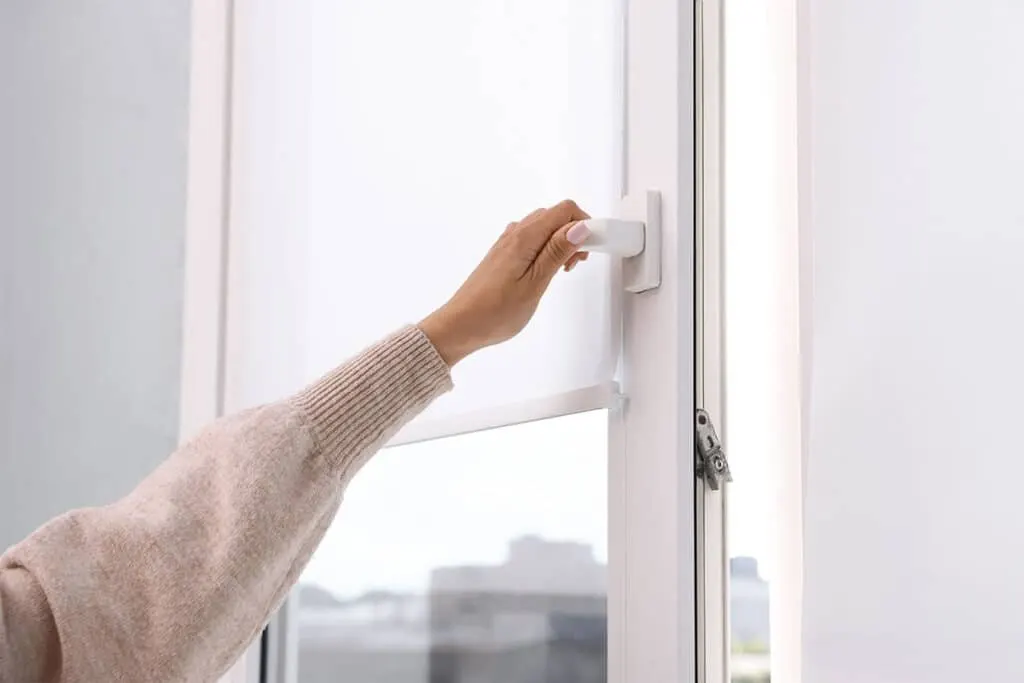
In Miami-Dade, exterior windows and doors are at the center of the real technical conversation. The county publishes its Product Approval system for building envelope components, and the official homeowner guide makes it clear that windows, doors and other common work fall under permits and code compliance.
In terms of cost, impact windows run about $12,000–$18,000 for a typical home with 10 windows, with an estimated ROI of 73–85% and possible insurance discounts of up to 45% depending on the case. In South Florida, that makes them a design, safety and property-value decision all at once. For a closer look, read our guide to impact windows cost in Miami.
Miami-Dade permits and condo rules
In Miami-Dade, if you touch structure, plumbing, electrical, HVAC, walls or exterior windows, assume you'll need permits. Painting, surface flooring, cabinets or countertops without moving systems, on the other hand, are usually exempt, according to the local guide and the City of Miami's official list of exemptions.
What many people think is “cosmetic” and isn't
It's common for owners to say:
- “I'm just going to open up the kitchen,”
- “I'm just going to move the sink a little,”
- “I'm just going to replace the windows.”
In Miami, those three decisions usually take a project out of cosmetic territory and into permits, inspections and reviews. The City of Miami even clarifies that interior remodels require a formal process and that if you change exterior windows or doors, you need specific permits.
How to choose for your property and goal
The safest way to choose a style in Miami isn't to ask “what's trending?” It's to ask these four questions:
1) Who is this property for?
- For you to live in?
- To sell?
- To rent?
- To compete in a high-end segment?
Your answer defines whether standard, mid-range or luxury makes sense for you.
2) What does your location punish most?
- salt air,
- humidity,
- harsh sun,
- logistics, if it's an apartment,
- a demanding HOA,
- or a high cost per square foot.
3) Where is it worth spending?
In Miami, it usually makes more sense to spend on:
- a well-done partial kitchen remodel,
- an understated bathroom,
- impact windows,
- thermal efficiency,
- the right lighting,
- and materials that won't fail in three years.
4) Which part of the work triggers permits and delays?
If the style you choose requires moving systems, opening up a kitchen, changing windows or doing plumbing work in a building, the real cost isn't just materials. It's also permits, reviews, timelines, re-inspections and building restrictions.
The best style choice in Miami doesn't come from Pinterest. It comes from weighing four factors: market, climate, budget and compliance.
If your property needs to look clean and functional, standard may be enough. If you're after the best balance between look, cost and return, mid-range is usually the smartest choice. And if the property competes at the top of the market, luxury can make sense, but only if the property can truly support it.
Planning well means choosing the style with the numbers, the materials and the permits on the table.
If you want to do it with sound judgment and without paying for costly mistakes, schedule an assessment with La Tribu Life. We help you plan your remodeling project, the finish level, the real cost, Miami-Dade permits and the project's feasibility before you commit any money.
Learn how we work at La Tribu Life.
Frequently asked questions
What's the most recommended interior design style in Miami today?
For most owners, the most balanced option is the mid-range level: Organic Modern Coastal. It usually looks more valuable than standard without the extra cost of luxury, and it fits better with the climate, current demand and expected ROI.
Can I do a “cosmetic” remodel without a permit in Miami?
Sometimes, yes. Painting, surface flooring and cabinets without moving plumbing or electrical usually fall under exemptions. But if you change windows, walls, the layout, circuits or ducts, you're usually no longer in cosmetic territory.
Which materials hold up best to humidity and salt air?
As a general rule, porcelain tile, sintered stone, paints suited to humidity and corrosion-resistant hardware perform better than solutions that are too delicate or poorly sealed. Near the ocean, choosing hardware and metals stops being an aesthetic decision and becomes essential.
Which upgrade usually gives the best return in Miami?
Partial kitchen remodels, bathroom upgrades and impact windows are usually among the decisions with the best balance between cost and return. The most expensive option doesn't always recover the most. In many cases, the winner is the balanced project, not the most luxurious one.
Note: The figures, costs, timelines and percentages in this article are for reference only. They can change by state, county or city, and over time. They are not a fixed rule or legal advice; always confirm them with the relevant official agency before you decide.
Informational content only. It does not replace professional advice and is not legal advice. La Tribu Life guides and represents homeowners, but does not perform construction work.

Comments
No comments yet. Do you have a question or an experience with a contractor? Share it.